



Tariffs Did Not Just Raise Costs. They Made Viable American Small Businesses Unbankable.
Posted by Joann Cartiglia on Sep 6th 2026
Tariffs Did Not Just Raise Costs. They Made Viable American Small Businesses Unbankable.
Posted by Joann Cartiglia on Sep 6th 2026
Tariffs Did Not Just Raise Costs. They Made Viable American Small Businesses Unbankable.
Small-business owner says tariffs later ruled illegal destroyed inventory, revenue, jobs, and access to credit, while the government offered no meaningful path to recovery
TICONDEROGA, N.Y. – The national tariff debate has overlooked one of its most damaging consequences: tariffs did not merely increase costs for small American brands. They reduced inventory, eliminated sales, undermined cash flow, increased high-interest debt, and destroyed the financial metrics that banks use to determine whether a business qualifies for credit.
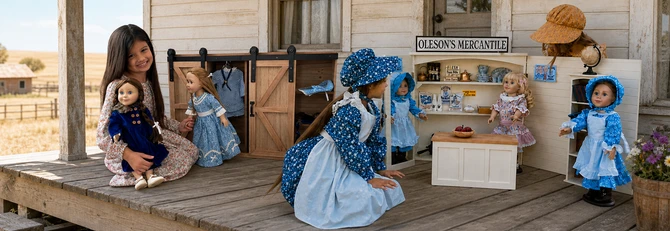
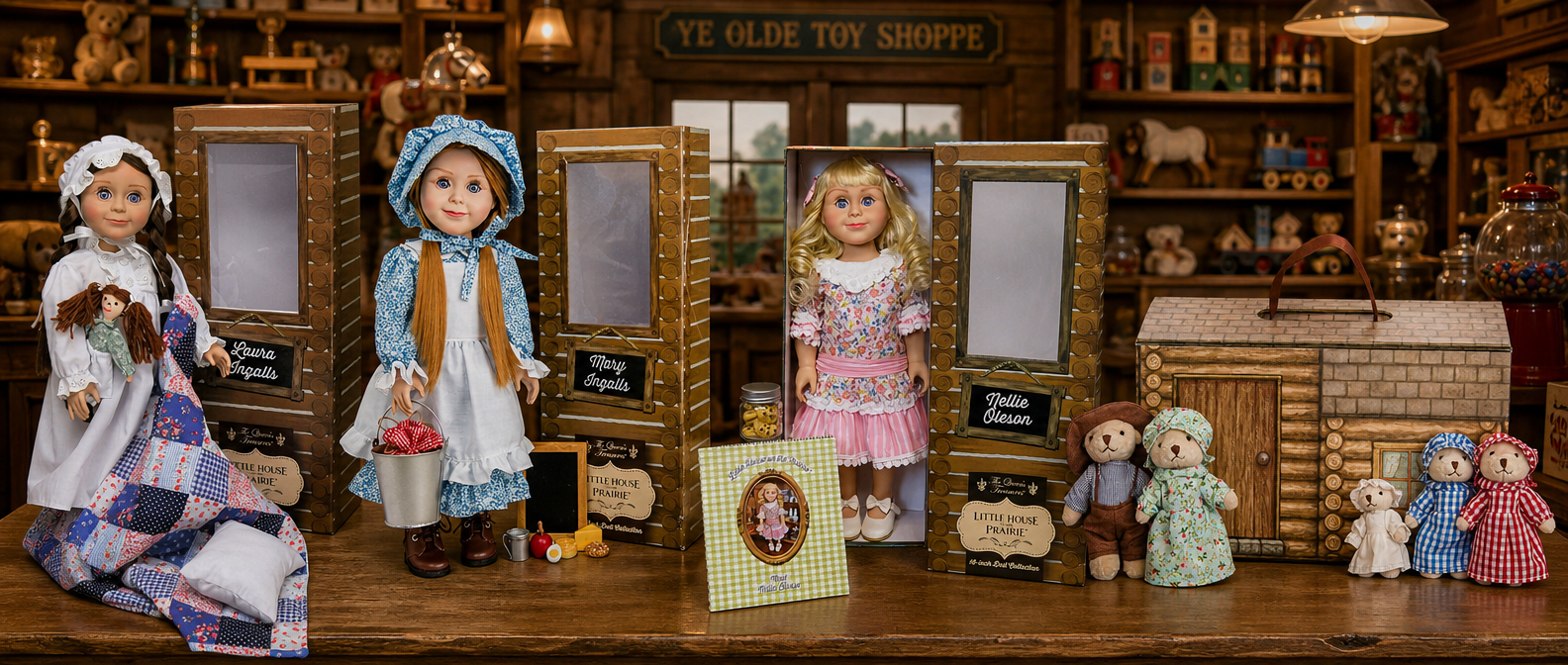
Joann Cartiglia, founder and president of The Queen’s Treasures, says that is precisely what happened to the American toy company she built from nothing more than 20 years ago.
“The losses appearing on our financial statements were not caused by disappearing customers, unsuccessful products, or an obsolete business model,” Cartiglia said. “They were caused by sudden tariff costs that dramatically increased the amount of money we needed to manufacture inventory. We could not afford to purchase enough product. When inventory disappeared, sales declined. When sales declined, cash flow weakened. Those losses are now being used by banks and government agencies to deny us the capital needed to restore production.”
“The government-created disruption caused the losses, and the losses are now being used to deny recovery.”
The Tariffs Were Later Ruled Illegal
On February 20, 2026, the United States Supreme Court ruled that the International Emergency Economic Powers Act, or IEEPA, did not give the president the authority to impose tariffs. The Court affirmed rulings invalidating the IEEPA tariffs imposed on imports from China, Canada, Mexico, and most other American trading partners. [congress.gov], [supremecourt.gov], [globaltrad...onslaw.com]
“The tariffs that caused extraordinary damage to my company were later ruled illegal by the Supreme Court,” Cartiglia said. “Yet that decision did not restore the inventory we could not afford, the products we could not manufacture, the sales that never happened, the employees we could not retain or hire, the credit-card interest we were forced to pay, or the creditworthiness those losses destroyed.”
The Supreme Court decision did not establish a simple, automatic process for returning all tariffs previously paid or compensating businesses for the broader economic harm they experienced. The mechanics of reimbursement remained unresolved and potentially dependent upon additional administrative proceedings or litigation. [hklaw.com], [skadden.com]
“It took more than a year for us to receive a tariff refund on the very small amount of inventory we were able to produce,” Cartiglia said. “That refund was only a fraction of the revenue we lost because we could not afford to place the production orders in the first place. We hear about the cost to consumers. Yet we hear nothing about the damage to small American Brands”.
“There is no reimbursement for our lost sales. There is no compensation for the interest we paid. There is no restoration of the financial statements damaged by inventory shortages. There is no government program or “bail out” for small business - that restores our borrowing capacity. And there is no meaningful recovery program for the law-abiding, tax-paying, average Americans whose businesses were financially harmed.”
The Small-Business Tariff Trap
The consequences followed a destructive but predictable sequence:
Average business credit-card interest rates are approximately 21 percent, making credit cards an extraordinarily expensive way to finance inventory. Approximately 62 percent of businesses used credit cards as a source of financing in 2025. [wallethub.com], [nav.com]
“The government did not merely impose a tariff,” Cartiglia said. “It forced small businesses to finance that tariff, often at credit-card interest rates. The resulting inventory shortages reduced our revenue, and the reduced revenue damaged our financial statements. Those same financial statements are now being used as the reason to deny us the working capital required to recover.”
“We cannot restore revenue without inventory. We cannot order inventory without capital. We cannot obtain capital because the absence of inventory reduced revenue.”
“That is the trap no one is talking about.”
Why Are We Not Talking About Lost American Revenue?
Public discussion has focused heavily on the amount of tariff revenue collected by the federal government.
Cartiglia argues that this is the wrong calculation.
“The government counted every dollar it collected at the border,” she said. “Why are we not talking about the American revenue that was destroyed?”
A national trade study found that imports support more than 21 million American jobs and that 96 percent of companies engaged in importing are small or medium-sized businesses. [nftc.org]
Based on The Queen’s Treasures’ internal financial structure, Cartiglia estimates that approximately 75 percent of company revenue is spent within the United States through:
This 75 percent figure is a company-specific estimate based on The Queen’s Treasures’ expenditure structure, not a claimed national industry average.
“When The Queen’s Treasures cannot afford a $100,000 production order, America does not merely lose the factory purchase,” Cartiglia said. “America loses the much larger sales volume that inventory would have generated, along with the American payroll, shipping, advertising, licensing, testing, certification, banking, professional services, taxes, and property investment supported by those sales.”
“If I lose, America loses. My brand spends approximately 75 percent of its income here, in the good old USA.”
“An imported product is not the end of the economic chain. It is the beginning of an American economic chain.”
Businesses with fewer than ten employees lost approximately 292,000 jobs in 2025, the largest annual decline recorded in the cited Intuit QuickBooks series. Tariff-exposed industries accounted for more than half of the losses among the smallest businesses. [jec.senate.gov], [jec.senate.gov]
A separate 2026 survey of 500 small and midsized American businesses found that 96 percent said tariffs had directly harmed their shipping, sourcing, or supply-chain operations. Sixty-two percent reported lost revenue or missed sales, while 51 percent experienced customer dissatisfaction or customer loss. [thescxchange.com]
“The government is measuring what it collected,” Cartiglia said. “It is not measuring what America lost.”
A Disaster Loan With No Meaningful Response to Another Disaster
The Queen’s Treasures also carries an SBA Economic Injury Disaster Loan originally issued to help the company survive the COVID-19 emergency.
Cartiglia said the company had not experienced difficulty making its scheduled EIDL payments before the tariff disruption. As tariff costs reduced inventory, revenue, and cash flow, however, the EIDL obligation became increasingly burdensome. The obligation also affects the company’s balance sheet and its ability to obtain additional working capital.
“The EIDL was a disaster loan,” Cartiglia said. “What the IEEPA tariffs did to thousands of small American businesses was also a disaster. It may not have looked like a flood, fire, or hurricane, but the economic destruction was real.”
“Inventory disappeared. Sales were lost. Jobs were eliminated or never created. Owners exhausted their savings, increased their credit-card debt, and personally guaranteed obligations in an effort to save businesses they had spent decades building.”
The SBA’s Hardship Accommodation Plan ended in March 2025. Some subsequent short-term payment assistance reportedly provided qualifying borrowers with a one-time, six-month reduction to 50 percent of their regular payments, but did not restructure the underlying debt or provide new recovery capital. [getoutofdebt.org], [jasontees.com], [bankruptcy...ources.org]
“What the SBA offered was six months of a reduced payment,” Cartiglia said. “That does not replenish inventory. It does not restore sales. It does not compensate us for losses. It does not refinance the obligation. It does not provide the money needed to put proven products back into production.”
“It temporarily reduces one payment while the underlying economic injury continues.”
“We never asked for a bailout. We wanted to be treated fairly and equitably. We wanted acknowledgment that government action caused measurable economic harm and that responsible businesses need a practical recovery path.”
We Never Moved American Jobs Overseas
Cartiglia rejects the suggestion that all companies manufacturing overseas made the same economic decision.
“There is an enormous difference between a multinational corporation that closed an operating American factory, moved established jobs overseas, and increased shareholder returns, and a small American entrepreneur who never had an American factory available in the first place,” she said.
The Queen’s Treasures produces specialty toys and handcrafted consumer products in relatively small production quantities. According to Cartiglia, an adequate domestic network of factories does not exist to accept those quantities while providing the required combination of custom sewing, miniature woodworking, assembly, hand finishing, tooling, pattern development, materials expertise, and engineering assistance.
“We never moved an American factory overseas,” Cartiglia said. “We never had a factory to move.”
“We manufacture overseas because there are no American factories available to accept our small production quantities and provide the technical capabilities and extensive handwork our products require.”
A small entrepreneur with an original idea does not automatically possess the capital, engineering knowledge, tooling expertise, material-sourcing network, pattern-development experience, production technology, or manufacturing staff required to transform that idea into a safe physical product.
“Our factory partners do much more than provide labor,” Cartiglia said. “They help transform our designs into functioning products. They contribute engineering, tooling, patterns, materials knowledge, product construction, quality control, safety support, and manufacturing capabilities.”
“Without those partnerships, many products developed by American entrepreneurs would never become reality. The American jobs and economic activity built around those products would never exist either.”
The Wrong Businesses Are Being Blamed
Cartiglia argues that public policy often fails to distinguish independent product innovators from large corporations that relocated existing production for financial gain.
“We were not the companies that closed American factories, eliminated American jobs, and moved production overseas to increase earnings per share or distribute larger dividends,” she said. “We are small entrepreneurs using the only manufacturing infrastructure available to transform American ideas into successful products and create American jobs around them.”
“We are not beholden to stockholders or quarterly earnings demands. We are beholden to our customers, employees, licensors, communities, and the safety laws governing our products.”
“We work in good faith. We care about our customers. We follow the law. We listen to the science behind product-safety standards. We arrange required testing. We certify our products to the government. We carry insurance. We maintain traceability. We answer customer questions. We process returns. We remain visible, reachable, and legally accountable.”
“I can sleep at night knowing that we have acted legally, ethically, and responsibly.”
American Brands Carry American Safety Accountability
American toy brands are subject to U.S. consumer-product safety requirements. They must comply with applicable mandatory standards, arrange required laboratory testing, maintain compliance records, issue required product certificates, preserve traceability, maintain insurance, and bear legal and financial responsibility for the products they place into American commerce.
“American brands are not merely importing products,” Cartiglia said. “We are designing, testing, certifying, insuring, licensing, marketing, warehousing, shipping, servicing, and standing behind those products in the United States.”
Direct foreign sellers increasingly compete for the same consumers through Amazon, Temu, SHEIN, and other online marketplaces. Marketplace research estimates that China-based sellers represent nearly half of Amazon’s top 10,000 U.S. sellers, while Amazon itself has acknowledged that China-based sellers account for significant portions of its third-party seller services and advertising revenue. [smartscout.com], [marketplacepulse.com]
The CPSC has announced recalls involving products manufactured in China and sold through Amazon, Temu, and SHEIN. Examples include children’s sleepwear that violated federal flammability standards, infant carriers that violated mandatory federal safety requirements, and approximately 254,000 packages of children’s pool toys recalled over an impalement hazard. [cpsc.gov], [cpsc.gov], [cpsc.gov], [ntd.com]
In 2024, the CPSC determined that Amazon was legally responsible as a distributor for more than 400,000 hazardous products sold by third-party sellers through Fulfilled by Amazon. [cpsc.gov]
“Responsible Chinese factories are not the enemy,” Cartiglia said. “Some of the most ethical, talented, and dependable people I have worked with are our Chinese manufacturing partners.”
“There are people who place profit and opportunity above safety and ethics in every country, including our own. The problem is not nationality. The problem is a system that rewards sellers who avoid meaningful accountability while weakening the American brands that accept it.”
Is Seller Disclosure Meaningful If Americans Cannot Use It?
The INFORM Consumers Act requires online marketplaces to collect, verify, and disclose specified information about qualifying high-volume third-party sellers. Amazon states that this information can include the seller’s identity, business address, working email address, phone number, bank information, and tax identification number. [sellercent...amazon.com]
Cartiglia questions whether this disclosure offers meaningful consumer protection when an American shopper clicks on a seller profile and finds business or contact information displayed in Chinese characters without a plainly identifiable and reachable American representative.
“Placing information on a page is not the same as making a seller meaningfully accessible to an American consumer,” she said. “If a parent cannot understand the seller’s information, locate a responsible party, or determine whom to contact if a child is injured, how has that parent actually been protected?”
The proposed SHOP SAFE Act sought stronger seller screening, identity verification, marketplace accountability, and U.S. service-of-process requirements for counterfeit goods affecting health and safety. The cited proposal was introduced but was not enacted into law. [democrats-....house.gov], [congress.gov]
“American consumers should be able to determine who sold them a product, who is legally responsible for it, and whom they can contact if something goes wrong,” Cartiglia said.
American Brands Built Markets That Others Now Exploit
Cartiglia remembers when Amazon gave American consumers an extraordinary opportunity to discover American brands that could not secure placement in major national retail chains.
“Amazon was once an amazing way for Americans to find American brands,” she said. “For smaller companies, it created access to a national market that had traditionally been controlled by large retailers. It allowed entrepreneurs to innovate, reach customers, create jobs, and compete through better products.”
Today, Amazon offers professional sellers aggregated marketplace intelligence through tools such as Product Opportunity Explorer. Amazon says the tool analyzes customer searches, purchases, reviews, pricing, product features, demand trends, customer expectations, and unmet market needs. [sell.amazon.com], [sellingpar...amazon.com], [sell.amazon.com]
“An American brand may spend years and significant money developing a product, educating consumers, creating demand, and building a market,” Cartiglia said. “Marketplace intelligence can then reveal what shoppers want, what they will pay, which features they value, what they dislike about existing products, and where profitable demand exists.”
“A competitor with immediate factory access can use that information to create a similar product, enter at a lower price, purchase prominent advertising placement, dominate search results, and erode the sales that made the opportunity visible.”
“The American innovator bears the cost and risk of developing the product and building the market. Someone else uses the resulting marketplace intelligence to capture it.”
Cartiglia does not contend that the availability of aggregated sales information automatically constitutes intellectual-property infringement. Her concern is the broader economic and competitive effect on smaller American product developers.
Different Treatment for the Largest Companies
Cartiglia contrasts the treatment of small consumer brands with the policy accommodations available to strategically important industries and large corporations.
NVIDIA is an American company that designs advanced semiconductors, while many of its most important chips have been manufactured by TSMC in Taiwan. Semiconductors were excluded from the broad reciprocal tariffs imposed on Taiwan in April 2025. [techpowerup.com]
Targeted semiconductor tariffs announced in January 2026 also included exemptions for covered products imported for specified U.S. data-center, research and development, startup, repair, industrial, consumer, and public-sector uses. [ibselectronics.com], [gibsondunn.com]
“I do not criticize an American technology company for relying on specialized manufacturing infrastructure in another country,” Cartiglia said. “That is precisely my point.”
“Government officials understood that highly technical manufacturing capabilities could not simply be recreated in the United States overnight when one of America’s largest and most valuable companies was involved.”
“Why was that same economic reality ignored for thousands of small American brands?”
“Why were small businesses blamed for using specialized overseas factories that accepted our quantities and helped transform American ideas into products?”
“Large corporations have lobbyists, attorneys, government-relations teams, financial reserves, and access to decision-makers. Independent businesses have personal guarantees, high-interest credit cards, exhausted owners, and employees whose livelihoods depend upon us.”
How Is This America First?
“How is it America First to protect large corporations that rely on overseas manufacturing while small American brands are left to absorb tariff costs that destroyed inventory, revenue, and access to working capital?” Cartiglia asked.
“How is it America First when the accountable American company follows U.S. safety laws, certifies its products, pays American taxes, creates American jobs, and invests most of its revenue in the American economy, while direct foreign sellers increasingly dominate the search results where American brands once thrived?”
“How is it America First when government action creates financial losses and those losses are later used by banks, the SBA, and economic-development agencies as reasons to deny the capital required for recovery?”
“We did not want a bailout. We wanted fair and equitable treatment. We wanted an absolute understanding of the difference between a large corporation moving established American jobs overseas and a small entrepreneur using the only available manufacturing infrastructure to create products and American jobs that otherwise would never have existed.”
A Fair Recovery Path
Cartiglia says she is not asking the government to guarantee the success of her company or protect it from legitimate competition.
“We wanted to be treated fairly,” she said. “We wanted policymakers, the SBA, lenders, and economic-development agencies to understand what happened.”
“Our customers did not disappear. Our products did not fail. Our market did not vanish. Government action increased inventory costs, reduced what we could manufacture, damaged our revenue, and undermined our access to credit.”
“The tariffs were later ruled illegal. But for businesses already harmed, that legal victory is hollow without a practical way to recover the duties paid, address the larger economic losses, restore access to capital, and restructure disaster obligations that became unaffordable because of the government-created disruption.”
“We never wanted a bailout. We wanted a fair opportunity to rebuild.”
I Want the American Dream Back
“I want the American Dream back,” Cartiglia said. “Not only for corporations with lobbyists, shareholders, and billions of dollars. I want it for ordinary entrepreneurs with original ideas, integrity, and the courage to build something from nothing.”
“The American Dream never guaranteed success. It promised that innovation, hard work, responsibility, good faith, and accountability would still matter.”
“Small American brands should not be blamed for using overseas factories that make entrepreneurship possible. They should not be forced to compete against less accountable sellers operating under different practical rules. They should not be financially harmed by government action later ruled illegal and then denied recovery because that damage appears on their financial statements.”
“The government counted the tariff revenue.”
“Why are we not talking about the American revenue that was destroyed?”
“If my company loses, America loses. American payroll is lost. American tax revenue is lost. American shipping is lost. American marketing is lost. American innovation is lost. American accountability is lost.”
“The government hurt thousands of small American brands and importers. Yet the law-abiding, tax-paying average Americans behind those businesses have received no meaningful path to recovery.”
“We deserve more than six months of reduced payments and another denial letter. We deserve dialogue. Farmers are talked about, big tech and “others” (who have been proven to take jobs from Americans in favor of shareholder dividends) got exemptions.
“My Senator’s team has not helped or even attempted to despite numerous emails to actual staffers, my county IDA turned us down, without even meeting with us, ever visiting our business, or attempting to understand what the financials really say. Small American brands – got the equivalent of a terminal illness and being denied the medication to help recover from the illegal actions of our government. I’m not backing down. I’m fighting for the American Dream for ALL!”
“We deserve a fair chance to rebuild what government action damaged.”
Media Contact
Joann Cartiglia
President
The Queen’s Treasures
Ticonderoga, New York
www.thequeenstreasures.com